

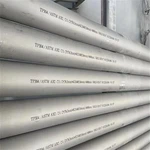


GENERAL
The Gnee H13 steel is a hot tool for working tools with an excellent combination of hardness and resistance to fracture, with the maintenance of these properties at temperatures up to 600 °C, resistance to thermal shocks and cracks due to thermal fatigue , this steel also has levels of machinability, polishing and the response to the important texturing for the segment of manufacturing molds for plastic injection.
Chemical composition – C (0.40) • Mn (0.4) • Si (1.0) • Cr (5.0) • Mo (1.30) • V (1.0)
Supply conditions – It is supplied in an annealed state with a maximum hardness of 230 HB
APPLICATIONS
The combination of its properties, especially at high temperatures, makes the H13 Gnee steel suitable to be used in many different applications, such as hot forging dies in presses, molds for aluminum extrusion alloys, casting to gravel pressure alloys in lo hacen , ferrous polymers abrasive injection molds such as thermostable.
THERMAL TREATMENT
Stress relief: In the tools of complex shapes, the elimination of heterogeneous material in thinning, sudden changes in sections, etc., the stress relief treatment must be carried out to minimize dimensional variations and shape during the temple and tempering . The treatment must be between 550 to 650 °C for at least 2 hours and then slowly cool down to 200 °C, then air.
Temple: austenize from the temperature of 1020ºC. Heat for 1 hour for every 25 mm of thickness and add 1 additional hour for every 25 mm. Cold air, warm acceptance, salt bath or nitrogen pressure in a vacuum. During heating and austenization, 2 preheating must be carried out to ensure uniformity of temperature and minimize distortions. The cooling must be appropriate for the size and geometry of the tools.
Tempered : It must be done immediately after the temple when the temperature reaches approximately 70ºC. The tempering temperature must be higher than 550 °C to avoid compromising the resistance to fracture. Generally speaking, it uses approximately 610ºC during a typical hardness of 45 HRC, recommended by the "North American Die Casting Association" of low pressure aluminum casting. For other hardness levels to select the tempering temperature according to the typical steel of this curve. When the material is nitrided later, the tempering temperature must be 50 °C higher than the nitriding temperature.
Cooling at 1020ºC. tempered twice of 2 hours each.
Nitrition: This treatment increases the resistance to wear due to hardening. The nitrided layer can be designed to take the white layer. The selection of the appropriate layer depends on the application of the tool. In general, the maximum hardness after nitriding is in the order of 1000HV. Reflow profiles after the nitriding process, surfaces with and without a white layer are shown in continuation
Etiqueta: aisi h13 tubo, suministrador, personalizado, por mayor, barato, descuento, lista de precios, precio bajo, en almacén, muestrario gratis


